Meridian Freight Insights
How Should Shippers Build a Reverse-Logistics Plan Before Peak Returns?
A returned unit can lose resale value while it waits for transportation, move twice because no one defined its destination, or arrive without the identity needed to issue credit. Peak planning should begin with disposition and time—not a blanket instruction to send everything back.
The short answer
Build the return path backward from the intended disposition. Define product identity, condition evidence, decision deadline and recovery owner first. Then choose the return channel, consolidation rule, inspection point and transportation service that protect that outcome. A unit that cannot be profitably recovered should not receive the same movement plan as saleable inventory.
The hidden cost is an unresolved unit
Returns are often treated as an outbound process running in reverse. The operating reality is different. The product may have incomplete packaging, uncertain condition, a customer-credit deadline, a supplier claim, a repair opportunity or no economical recovery path at all.
That uncertainty changes transportation. Consolidating several compatible returns can reduce fragmented moves, but every additional day may reduce resale value. Sending an item directly to a distribution center can be fast, but wasteful if the unit ultimately belongs at a repair site, supplier or recycling partner. The best network therefore does not ask only, “How do we get it back?” It asks, “What decision must this product reach, and what is the least risky path to that decision?”
NRF’s 2025 Retail Returns Landscape projected $849.9 billion in merchandise returns and estimated that 19.3% of online sales would be returned. Those figures are industry estimates, not a forecast for any individual shipper. Their practical message is that return design deserves capacity, data and exception planning before seasonal volume arrives.
Use one controlled path from authorization to recovery
The transportation decision belongs in the middle of the return process—not at its beginning.
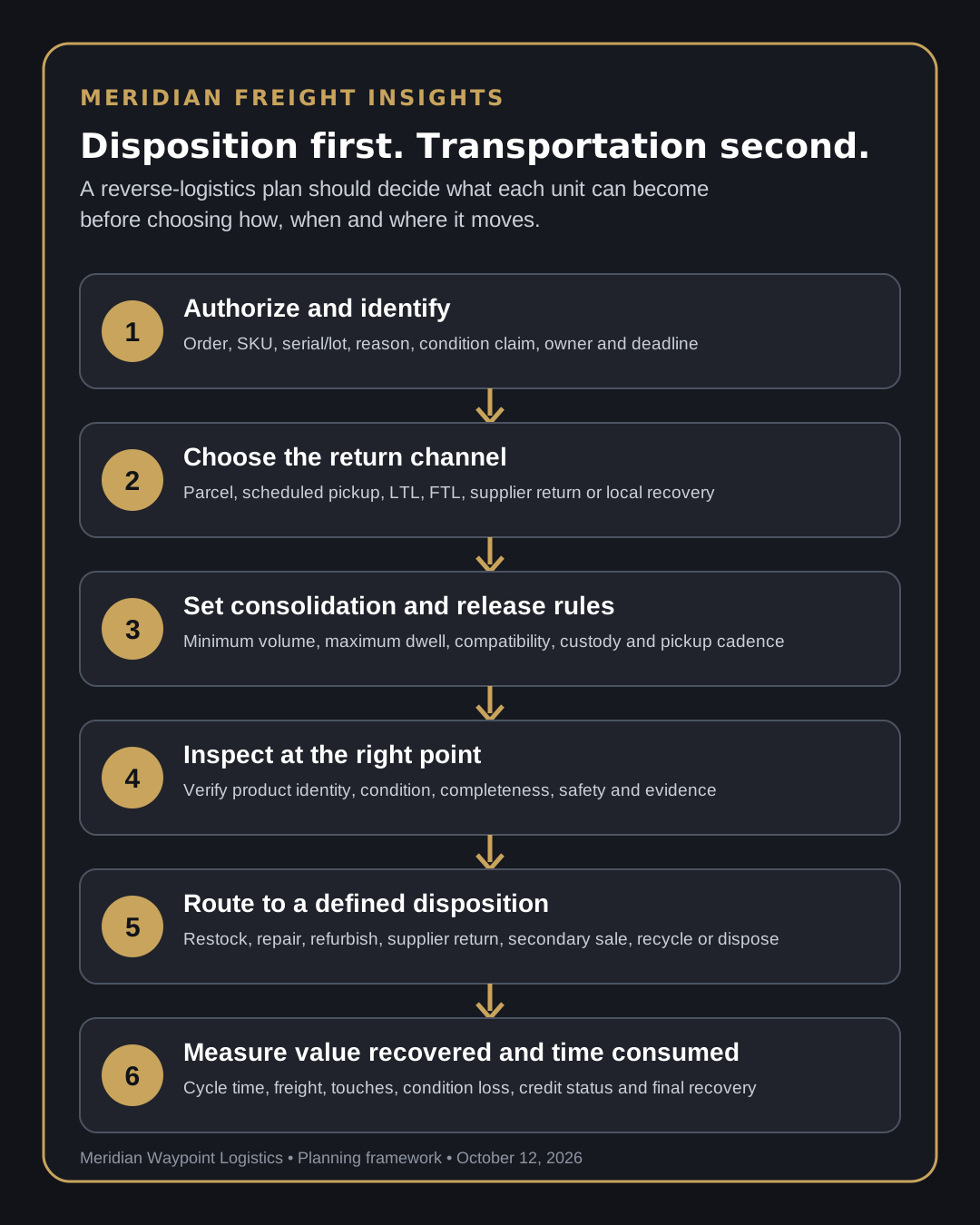
Six gates for a reverse-logistics operating plan
Each gate should produce a decision, owner and exception rule that the next handoff can use.
1. Define the business obligation before the return moves
A return authorization should identify the product, reason, claimed condition, commercial owner and decision deadline. Without that control record, transportation can move an unidentified problem to a second facility without improving the outcome.
- Capture order, SKU and any lot, serial or asset identifier needed for reconciliation
- Record the return reason separately from the eventual condition finding
- Name who can approve credit, replacement, repair, supplier recovery or disposal
- Set the last useful date for resale, repair, warranty recovery or customer resolution
2. Segment the return channel by product and customer need
The easiest consumer return method is not automatically the right freight plan. A small parcel, boxed furniture item, palletized component and regulated product have different packaging, pickup, custody and inspection requirements.
- Separate parcel-ready products from freight that needs LTL, FTL or specialized handling
- Confirm packaging, labeling and pickup instructions before the item is released
- Keep incompatible, damaged, hazardous or high-value goods out of a default consolidation stream
- Match the promised customer experience to an operationally supportable return path
3. Set consolidation rules with both a volume trigger and a time limit
Consolidation can reduce fragmented transportation, but waiting for a fuller shipment can destroy resale time or delay a customer credit. The shipper needs a release rule that balances freight efficiency with the value of time.
- Define the minimum compatible volume for a pooled LTL or multi-stop freight move
- Set a maximum dwell time even when the volume target has not been reached
- Confirm loading order, stackability, condition separation and chain-of-custody evidence
- Use direct routing for items whose value, service deadline or condition cannot tolerate a wait
4. Place inspection where it can change the routing decision
Inspection creates value only when its finding changes what happens next. A light identity and safety check may belong near first receipt, while technical grading may require a repair center, supplier or trained quality team.
- Define the evidence needed at pickup, consolidation, receiving and final disposition
- Keep customer-reported reason, carrier exception and verified product condition as separate fields
- Prevent a cosmetically damaged, incomplete or unsafe unit from entering saleable inventory
- Create an exception lane for units that cannot be classified within the normal process
5. Route each condition class to a named disposition
A returned unit should not arrive at a building simply because that building handles returns. It should move toward a defined decision: restock, repair, refurbish, supplier return, secondary sale, recycling or disposal.
- Assign a destination, owner and required evidence to every disposition code
- Verify whether product value justifies transportation and handling to the recovery point
- Document supplier, warranty and customer requirements before tendering the move
- Use qualified specialists for product safety, hazardous materials, data-bearing devices and regulated disposal
6. Measure the complete recovery result
A low linehaul rate can still support an expensive return if the product loses value while it waits, receives unnecessary touches or cannot be matched to a credit. Measure transportation as one part of the recovery cycle.
- Track authorization-to-receipt and receipt-to-disposition time separately
- Measure freight, accessorials, handling, storage, inspection and condition degradation
- Reconcile customer credit, supplier recovery and final product disposition
- Feed recurring return reasons back to merchandising, packaging, fulfillment and transportation teams
Match the transportation pattern to the return profile
| Pattern | Best considered when | Exposure to control |
|---|---|---|
| Direct parcel return | Items are parcel-ready, individually identified and time-sensitive. | Packaging, label accuracy, fragmented cost and destination logic. |
| Scheduled freight pickup | Items are large, palletized, high-value or operationally unsuitable for parcel. | Dimensions, condition, access, equipment, handling and appointment readiness. |
| Regional consolidation | Compatible returns accumulate near customers, stores or field locations. | Dwell, identity, commingling, custody, inspection and release thresholds. |
| Direct to supplier or repair | Disposition is known and an intermediate warehouse would add no useful decision. | Authorization, receiving rules, warranty evidence and final-mile acceptance. |
| Hybrid network | Product classes, regions and deadlines require different paths. | Clear routing rules, data handoffs and ownership when the item does not fit. |
Time is a product attribute
A return that can be resold this week may become clearance inventory after a long consolidation dwell. Record the final useful decision date and route backward from it. That deadline—not calendar convenience alone—should determine release frequency.
Identity must survive every handoff
GS1 US describes reverse logistics as movement from the final point in the supply chain back to a seller, manufacturer or third party for return, repair, recycling, refurbishing or disposal. Product identity and event data are what allow those different outcomes to remain distinguishable.
Build the peak-return briefing before volume arrives
- Product classes and expected return origins
- Return reasons and condition categories
- Packaging and handling requirements
- Parcel, LTL and FTL eligibility rules
- Pickup locations, access and operating hours
- Consolidation minimums and dwell limits
- Inspection points and evidence standards
- Disposition destinations and receiving rules
- Customer-credit and supplier-claim deadlines
- Exception owners and recovery authority
Frequently asked questions
Should every retail return go back to the original distribution center?
No. The right destination depends on product condition, resale or repair deadline, inspection capability, supplier terms, freight profile and available recovery options. Routing every unit to one building can add miles and touches without improving disposition.
When does consolidating returns make sense?
Consolidation is most useful when compatible products accumulate in a defined geography, the shipper can maintain identity and custody, and the time required to build the load does not erase recovery value or delay customer obligations.
When should a return move by LTL instead of parcel?
LTL may fit when the packaged item is too large or unsuitable for parcel, several compatible units can be palletized, or pickup and delivery requirements need a freight service. Dimensions, weight, packaging, condition, accessorials and facility constraints still need to be verified.
What is the most important reverse-logistics metric?
There is no single universal metric. Start with recovery cycle time, complete landed recovery cost, verified disposition and value recovered. Add customer-credit time, condition loss and repeat return reasons where they affect the business.
How can Meridian support a reverse-logistics plan?
Meridian can help translate return locations, freight profiles, volume, timing, facility requirements and disposition destinations into available parcel-adjacent, LTL, FTL, multi-stop, consolidation and managed-freight options. Product grading, repair, regulatory and disposal decisions remain with the shipper and qualified specialists.
Sources and planning references
- National Retail Federation: 2025 Retail Returns Landscape — industry return estimates and consumer/retailer research; accessed October 12, 2026.
- GS1 US: What Is Reverse Logistics? — process definition and product-flow context; accessed October 12, 2026.
- UPS Supply Chain Solutions: Reverse Logistics — examples of post-sales logistics capabilities; accessed October 12, 2026.
- FedEx: Returns Solutions for Businesses — examples of consumer-return channels and consolidation options; accessed October 12, 2026.
This article provides general transportation-planning information. Product safety, packaging, hazardous-materials, data security, environmental, accounting, warranty, legal and regulatory decisions belong to the shipper and qualified specialists.
Meridian Waypoint Logistics
Turn the return map into an executable freight plan
Share return origins, product profiles, expected volume, packaging, facility requirements, consolidation limits, recovery destinations and customer deadlines. Meridian can help compare available LTL, FTL, multi-stop, consolidation and managed-freight options against the actual return profile—then coordinate the transportation handoffs and exception ownership.