Meridian Freight Insights
How Should Manufacturers Plan Freight Around a Plant Shutdown?
A planned outage changes receiving access, shipment priority, custody and restart demand. The freight plan should control those transitions—not simply tell carriers the plant will be closed.
The short answer
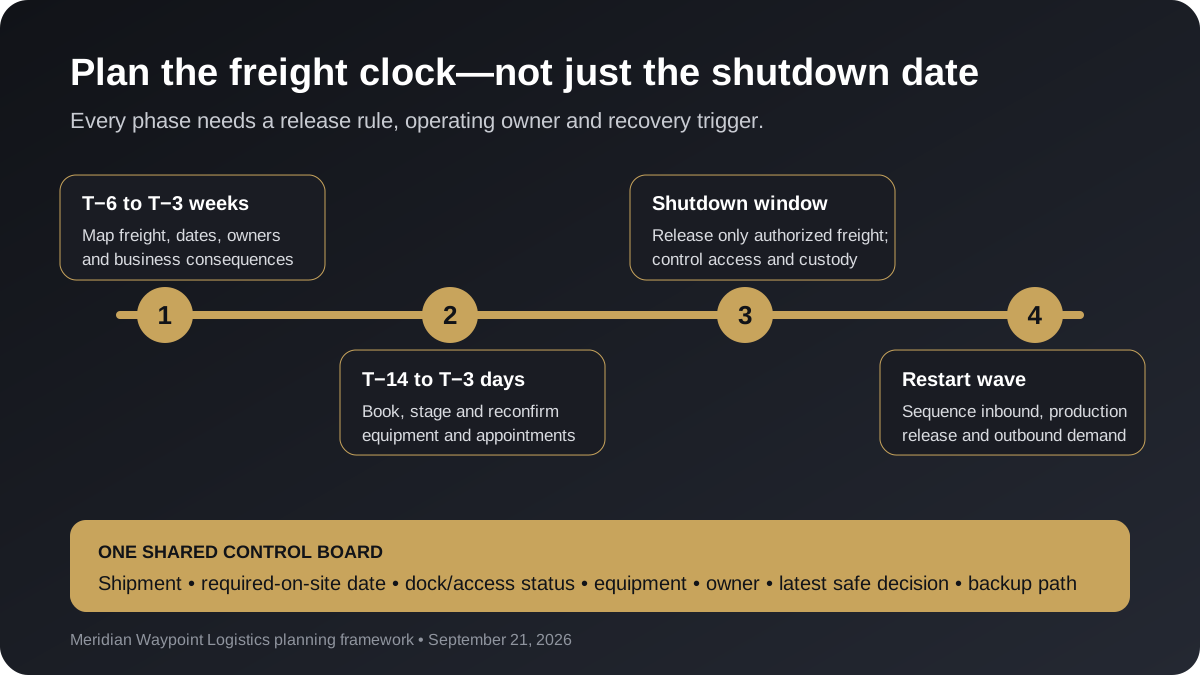
Build one shared freight clock covering the final normal receiving day, authorized outage deliveries, restart-critical inbound freight and the first outbound wave. Give every shipment a required-on-site date, access status, named owner, latest safe decision point and approved backup path.
Why a planned outage creates unplanned freight failures
Manufacturing shutdowns and maintenance turnarounds are usually managed as facility events. Transportation, however, operates on a different clock: suppliers release material, carriers accept tenders, drivers consume available hours, appointments fill and customer orders continue moving toward promised dates.
The U.S. Census Bureau's Manufacturers’ Shipments, Inventories, and Orders program tracks how orders, shipments and inventories move independently across manufacturing. At the plant level, the same distinction matters. A temporary production stop does not automatically stop inbound purchase orders, inventory transfers, contractor material or outbound customer obligations.
The practical control is a freight plan connected to the shutdown schedule, production restart and customer commitments. A single “closed” date is not enough.
Use a four-stage freight clock
The dates below are planning stages, not universal lead times. Specialized freight may require a longer horizon.
Six gates before releasing shutdown freight
Each gate should produce a documented answer. Assumptions should not travel with the shipment.
1. Set freight dates by operating function
A plant may have one published shutdown window, but transportation needs several cutoffs. Receiving, shipping, maintenance access, security coverage, yard movement and production release may stop and restart at different times.
- Last normal inbound receiving appointment
- Last production-critical delivery before the outage
- First authorized maintenance or contractor delivery
- First restart inbound and first finished-goods pickup
2. Classify every shipment by consequence
Do not prioritize only by requested date. Separate freight that protects the outage, the restart, a customer commitment or ordinary replenishment. Each class needs a release rule and an owner who can change it.
- Shutdown-critical parts, tools and contractor material
- Restart-critical raw material and packaging
- Customer-critical finished goods
- Freight that can be deferred without material exposure
3. Verify access before booking transportation
A carrier appointment is not a facility-access plan. Confirm which gate, dock, staging area and contact remain active, and whether the shipment can be safely handled during maintenance activity.
- Authorized gate and operating hours
- Dock, yard and unloading-equipment availability
- Security and receiving contact coverage
- Written restrictions from facility safety and maintenance leaders
4. Match service to the shutdown clock
The shipment does not need the fastest service by default. It needs a service whose pickup, transit and recovery options protect the latest safe on-site date without creating avoidable dwell.
- Backplan from required-on-site time, not the purchase-order date
- Separate committed transit from contingency time
- Confirm oversized, temperature, securement or special-handling requirements
- Define when an alternate service must be authorized
5. Control custody and documentation during the outage
Temporary storage, closed departments and changing personnel can blur ownership. Every in-window shipment should have a named recipient, documented condition and a clear location after delivery.
- Purchase order, shipment ID and on-site work package
- Photo or seal evidence when appropriate
- Named custody transfer and storage location
- Exception contact who is actually available during the outage
6. Prebuild the restart wave
A shutdown can end on schedule while the freight network still fails. Restart demand should be sequenced around line readiness, dock capacity, labor and customer priorities instead of releasing every held shipment at once.
- First-production materials by line and shift
- Packaging and consumables needed before finished-goods release
- Outbound orders ranked by customer consequence
- Backup transportation for the few loads that cannot wait
Build the control board around decisions
| Field | Question it answers | Failure it prevents |
|---|---|---|
| Required-on-site date | When must the material be available for the work or restart? | Booking to a requested date that does not protect the operation |
| Access status | Can this exact freight enter, unload and transfer custody? | Driver arrival at a closed or unsafe receiving point |
| Latest safe decision | When must the team escalate or change service? | Waiting until recovery is no longer feasible |
| Backup path | What approved alternative protects the business outcome? | Improvised premium moves without operating approval |
Run one daily exception review
During the final two weeks, review only the shipments whose dates, access, service or ownership have changed. Keep normal freight visible, but focus the meeting on decisions that can still be made.
Reconfirm the restart—not just the outage
Maintenance completion, production readiness and receiving capacity can move separately. Require a final restart release before unleashing held inbound and outbound freight.
Keep transportation planning subordinate to facility safety
Transportation coordination does not authorize access to a maintenance area or replace facility safety procedures. The plant’s environmental, health and safety leadership must define access, isolation, escort, unloading and custody requirements. Carrier and broker instructions should reflect those approved conditions.
This article provides general transportation-planning information. It is not safety, regulatory, engineering, legal or operational advice. Site-specific decisions belong to qualified facility leaders and advisers.
Frequently asked questions
How early should transportation planning begin for a plant shutdown?
Begin when maintenance and production dates become credible enough to identify freight consequences—often several weeks before the outage. Longer planning is appropriate for specialized equipment, oversized freight, imported components or constrained delivery access.
Should all inbound freight arrive before the shutdown?
Not necessarily. Early delivery can create storage, congestion and custody problems. The right answer depends on criticality, available staging space, access during the outage, material condition and the cost of a late restart.
What belongs on the shutdown freight control board?
At minimum: shipment ID, material, origin, required-on-site date, access status, equipment, assigned owner, latest safe decision time, current status and approved backup path.
How can Meridian support the plan?
Meridian can help organize the shipment schedule, operating requirements, service alternatives, appointment confirmations and exception ownership into a coordinated transportation plan. Facility safety, maintenance and production leaders retain authority for on-site requirements and release decisions.
Sources and planning references
- U.S. Census Bureau: Manufacturers’ Shipments, Inventories, and Orders — current statistical program overview; accessed September 21, 2026.
- Occupational Safety and Health Administration materials on control of hazardous energy — background for qualified facility safety leaders; accessed September 21, 2026.
- Federal Motor Carrier Safety Administration hours-of-service regulations — operating constraints relevant to feasible pickup, transit and delivery planning; accessed September 21, 2026.
Planning transportation around a shutdown or restart?
Share the shipment schedule, operating windows, equipment requirements and critical customer or production dates. Meridian can help organize the transportation plan and exception controls around the approved facility schedule.