Meridian Freight Insights
How Should Shippers Split Freight Between Contract, Spot and Backup Capacity?
A strong Q4 plan does not force every shipment into one buying method. It commits the repeatable base, gives variable demand a controlled flexible path, and protects business-critical exceptions before they become expensive emergencies.
The short answer
Place stable, repeatable lanes in the committed layer; route seasonal and forecast-sensitive loads through a defined flexible layer; and reserve a documented contingency path for shipments whose failure would materially affect production, customers or product condition. Size each layer from lane-level history and operating obligations—not a universal contract-versus-spot percentage.
Why one national market signal cannot set a shipper's capacity mix
Recent public indicators point in different directions. The Bureau of Transportation Statistics reported that its July 2026 Freight Transportation Services Index fell 0.7% from June and 2.0% from a year earlier. The Bureau of Labor Statistics separately reported that August prices for truck transportation of freight increased 2.0% from July and 14.3% from August 2025.
Those measures describe different parts of the freight market. Together, they reinforce a practical point: a softer national volume indicator does not guarantee that a specific shipper will find the right equipment, schedule and service at a lower total cost. Lane direction, pickup day, facility constraints, equipment type, lead time and customer obligations still determine the operating answer.
A useful capacity plan therefore begins with the shipper's own freight. Market data can inform timing and negotiation, but it should not replace a lane-level operating design.
Build a three-layer capacity portfolio
The model is a planning framework, not a prescribed allocation. Each layer earns its size from evidence.
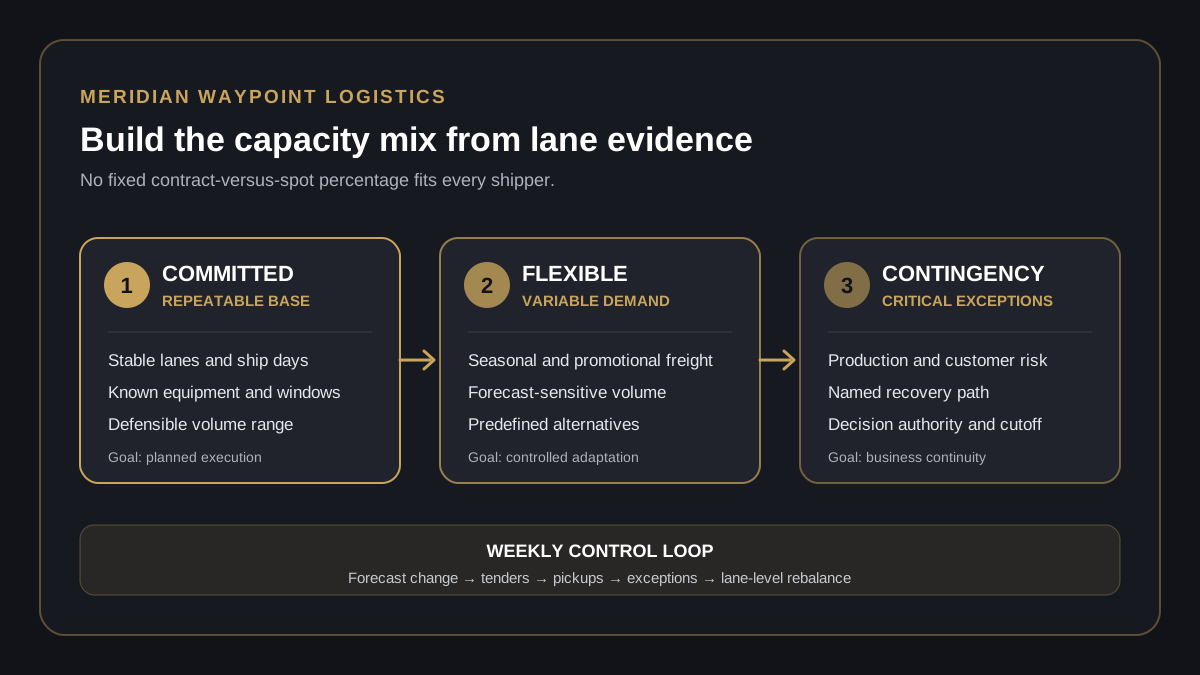
Committed
Repeatable lanes, reliable shipping days, known equipment and defensible volume. The goal is planned execution and shared operating expectations.
Flexible
Seasonal, promotional and forecast-sensitive freight with defined tender timing, alternatives and escalation—not unmanaged last-minute demand.
Contingency
High-consequence exceptions with a named recovery path, decision authority and latest-safe intervention point.
Six gates before assigning freight
Treat the layers as one operating system. A weak handoff between them can erase the benefit of a strong primary plan.
1. Separate base volume from forecast noise
Committed capacity should start with freight that repeats often enough to plan: stable origins, destinations, equipment, shipping days and customer requirements. Monthly averages can hide the volatility that matters at the lane and day-of-week level.
- Build the baseline from completed shipments by lane and shipping day
- Remove one-time promotions, shutdown recoveries and project freight
- Compare the average with the recurring low and high weeks before making a commitment
2. Match commitment to what the shipper can actually tender
A volume commitment only works when production, inventory and customer orders can support it. Overcommitting can create unused-capacity exposure; undercommitting can leave predictable freight competing for last-minute coverage.
- Define the committed unit precisely: loads, pallets, weight, days or a lane schedule
- Set an agreed forecast horizon and a date when expected volume becomes firm
- Document what happens when either side cannot meet the planned volume or capacity
3. Put variable freight in a controlled flexible pool
Seasonal, promotional and order-driven freight still needs a plan. It should sit in a defined flexible pool with tender timing, equipment alternatives and escalation rules—not in an undefined gap between the core award and the spot market.
- Identify which lanes can absorb extra volume and which require separate planning
- Set the latest useful forecast and tender times by shipment type
- Predefine acceptable service and equipment alternatives before a surge arrives
4. Reserve contingency capacity for business-critical exceptions
Backup capacity should be designed around the consequence of failure. Production outages, retailer chargebacks, missed installation windows, export cutoffs and temperature-sensitive freight may justify a stronger recovery path than routine replenishment.
- Rank exceptions by business impact, not by who escalates loudest
- Name the person authorized to approve premium service or an alternate mode
- Record the customer deadline and the last recovery point before it becomes impossible
5. Price each layer on total operating exposure
The lowest linehaul number is not always the lowest delivered cost. Compare fuel, accessorial rules, minimums, stop charges, detention, equipment, appointment risk, rejected tenders, premium recoveries and service failure exposure across the full capacity plan.
- Keep linehaul, fuel and accessorial assumptions visible rather than blended
- Model the cost of forecast error and recovery—not only the planned shipment
- Use the same lane facts and service requirements when comparing alternatives
6. Install a weekly rebalancing rule
A capacity plan should change when the operating evidence changes. A short weekly review can move freight between committed, flexible and contingency layers before performance problems become a quarter-end surprise.
- Track tender acceptance, pickup performance and shipment exceptions by lane
- Compare actual volume with the forecast and committed range
- Assign corrective actions and an owner before the next forecast is released
Use a lane-level assignment table
| Freight pattern | Primary layer | Evidence required | Control to document |
|---|---|---|---|
| Stable recurring lane | Committed | Shipment history by day, equipment and customer window | Volume range, tender timing, service expectation and exception process |
| Seasonal or promotion-driven lane | Flexible | Forecast confidence, surge timing and acceptable alternatives | Forecast milestones, decision dates and escalation owner |
| Production- or customer-critical shipment | Contingency | Cost of failure and latest workable delivery point | Alternate service, approval authority and recovery trigger |
Contract, spot and backup capacity do not guarantee a price or service result. Actual availability and terms depend on the lane, equipment, timing, operating requirements, market conditions and provider agreement.
Start with twelve months of lane history
Summarize weekly loads, shipping days, equipment, tender lead time, accepted and rejected tenders, pickup performance, accessorials and shipment exceptions. Keep major one-time events visible rather than allowing them to distort the baseline.
Run the plan as a weekly control loop
Review forecast change, tenders, pickups and exceptions by lane. Shift freight only when the evidence crosses an agreed trigger, and document the reason so the next procurement cycle starts with better data.
The capacity-planning brief Meridian would want to see
Measure whether the portfolio improves the business outcome
Do not judge the plan only by contract utilization or the share of loads moved on the spot market. Track forecast accuracy, tender acceptance, pickup performance, delivery performance, accessorials, premium recoveries, customer failures, total cost per completed shipment and time spent managing exceptions.
If utilization rises while missed pickups or service failures increase, the shipper may have committed the wrong freight. If the flexible pool grows every week, the baseline or forecast process may need repair. The plan is working when freight moves reliably and exceptions become visible early enough to manage.
Frequently asked questions
How much freight should a shipper place under contract?
There is no universal percentage. The appropriate amount depends on how repeatable the lane, shipping day, equipment, volume and customer requirement are. Commit the defensible base, keep a planned flexible layer for variable demand, and protect high-consequence exceptions with a defined contingency path.
Is spot freight always more expensive than contract freight?
No. Pricing depends on the lane, timing, equipment, market conditions and shipment requirements. The better comparison includes total operating exposure: service reliability, fuel and accessorial terms, internal workload, tender failures and the cost of recovery.
What belongs in a backup-capacity plan?
Include the shipment types that would materially affect production, customer commitments, export cutoffs or product condition if they failed. Define the alternate service, tender timing, approval authority, escalation contacts, maximum useful recovery point and information required to activate the plan.
How often should a shipper rebalance the capacity mix?
Review it at least weekly during a seasonal or volatile period and after material forecast, production or customer changes. The goal is not constant rebidding; it is early correction when actual volume or performance moves outside the agreed operating range.
How can Meridian help build the capacity plan?
Meridian can help organize lane history, forecast timing, equipment needs, customer commitments and exception exposure into a practical comparison of committed, flexible and contingency transportation options for the shipper's operation.
Sources and operating references
- Bureau of Transportation Statistics: July 2026 Freight Transportation Services Index — released September 9, 2026; accessed September 14, 2026.
- U.S. Bureau of Labor Statistics: Producer Price Index table 2 — August 2026 transportation price data released September 10, 2026; accessed September 14, 2026.
- Federal Motor Carrier Safety Administration: Hours of Service — operating rules and current guidance affecting feasible pickup and delivery planning; accessed September 14, 2026.
Building a Q4 capacity plan lane by lane?
Share the lanes, shipment history, forecast, equipment, facility constraints and customer obligations. Meridian can help structure the committed, flexible and contingency transportation comparison around your operation.